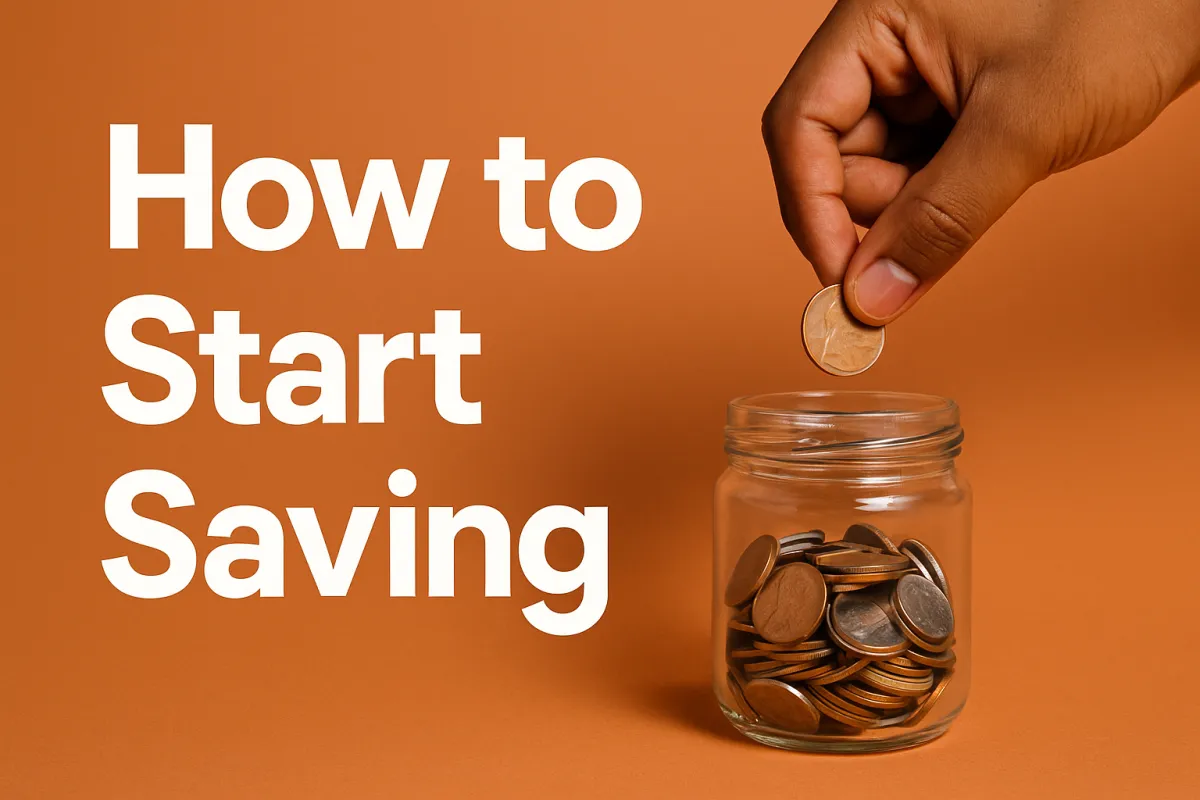
How to Start Saving (Without Feeling Broke or Overwhelmed)
According to a recent Bankrate survey, more than 60% of Americans wouldn’t be able to cover a $1,000 emergencywithout going into debt.
Let that sink in.
Not because people are lazy. Not because they don’t make money. But because life is expensive, and saving is hard when it’s treated like an afterthought.
But here’s the good news: Saving money isn’t about being perfect or depriving yourself. It’s about starting, building momentum, and making small changes that stick.
I’ve been there. I remember when I first tried to save money seriously. It felt like I was giving up part of my paycheck for something invisible. I’d open my banking app and think, “How am I supposed to save when my bills already eat up everything?”
If that sounds like you, here’s a straightforward way to begin saving without overthinking it or falling off after a week.
Step 1: Pick a Number That Doesn’t Scare You
Let’s be honest, when people say “just save 20% of your income,” it sounds nice… until the bills hit.
If saving 10% feels doable, great. But if not? Start smaller. Maybe it’s $50 a paycheck. Or $100. Even $20 is better than nothing.
When I first got serious about saving, I started with just $75 every two weeks. That’s it. I didn’t wait for a raise. I didn’t wait until I paid off everything. I picked a number I wouldn’t miss.
That’s the point—pick a number that’s too small to fail.
The goal isn’t to impress anyone. The goal is to build consistency.
Step 2: Automate It Before You Think About It
Here’s what I learned the hard way: if you wait until the end of the month to save what’s “left over,” there will never be anything left.
Saving needs to happen at the beginning. Before you touch the money. Before it ever hits your checking account.
Here’s what you can do:
Open a separate savings account. Preferably a high-yield one (Ally, Marcus, Capital One 360—plenty of solid options).
Set up automatic transfers from your main checking account the same day your paycheck hits. Or better yet, split your direct deposit so a percentage goes into savings automatically.
When I did this, I stopped noticing the money was gone. I wasn’t fighting myself to remember or justify skipping it. It just happened. Like a bill I paid to my future self.
And that’s the key, it has to be easy enough to not rely on discipline.
Step 3: Treat Saving Like a Habit (Not a One-Time Thing)
The first few times I did this, I still worried.
“What if I need that money later?”
“What if I can’t cover rent next month?”
But guess what? I adapted. My budget adjusted. I made different decisions. And the more I saw my savings grow, the better it felt.
Think of saving like going to the gym for the first time. It’s a little painful. A little awkward. But after a few weeks, you start seeing the change, and that’s what keeps you going.
You don’t need to save a massive amount today. You just need to save something. And then do it again next week. And the week after that.
Soon, you’ll look back and think, “Wow. I didn’t even miss that money.”
And that’s when you start increasing it. When the $50 becomes $75. When the $100 becomes $200. But only once it feels natural.
This is the exact process I used to save $13,500 in one year.
Final Thought: Start Small. Start Now.
I’ll leave you with this:
Saving money isn’t about being rich. It’s about being ready.
Ready for opportunities. Ready for emergencies. Ready to live on your own terms.
And all it takes is getting started.
So don’t overthink it. Open that new account. Set the automatic transfer. Pick a number that feels easy.
Do it today. Because once you start, momentum will do the rest.
And if you ever get stuck or want someone to walk through it with you—I’m here.
Let’s build your future one habit at a time.